
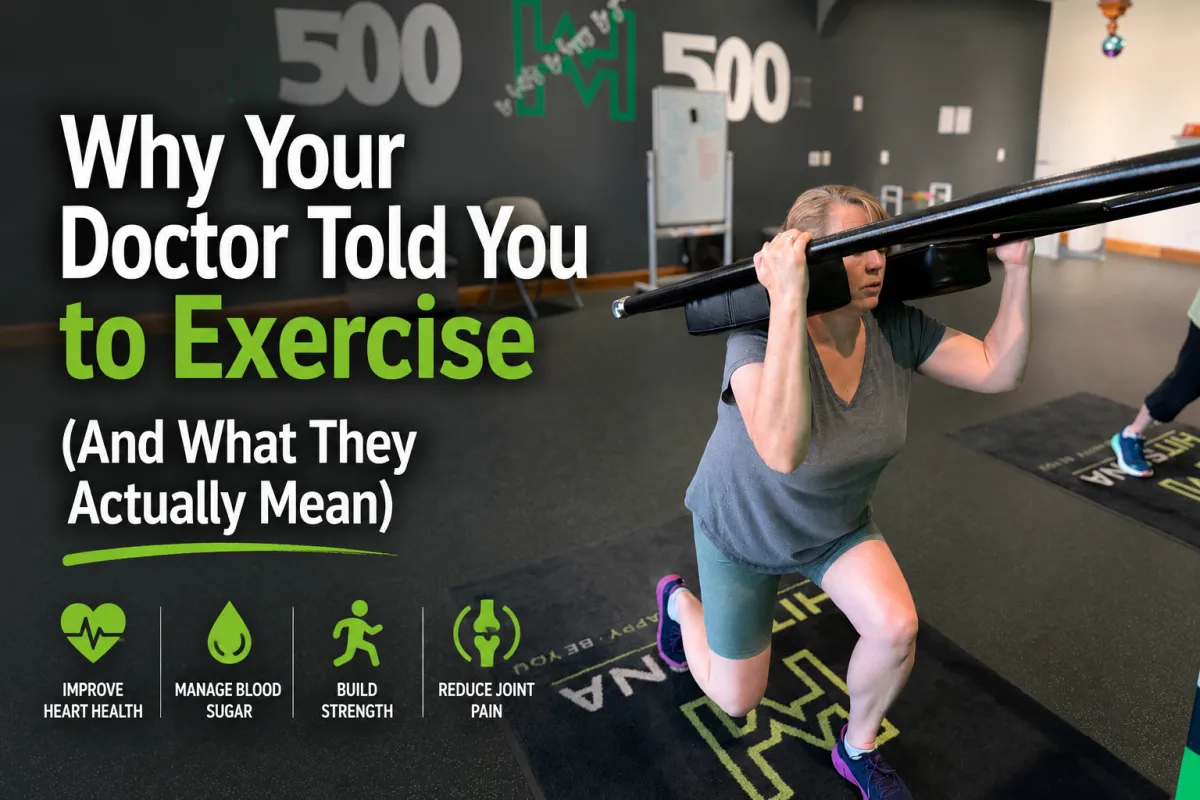
Why Your Doctor Told You to Exercise (And What They Actually Mean)
Almost every day, someone leaves a doctor's office in Fort Wayne hearing the same advice:
"You're going to need to exercise more."
For some people, it's because of weight gain.
For others, it's elevated blood pressure, high cholesterol, prediabetes, joint pain, or declining strength.
The challenge is that most people aren't told exactly what exercise means—or how to get started.
If you've ever left an appointment wondering what your doctor actually wanted you to do, you're not alone.
Let's break it down.
What Your Doctor Is Actually Trying to Improve
When doctors recommend exercise, they're usually not focused on appearance.
They're focused on reducing health risks and improving quality of life.
Exercise can help improve:
Blood pressure
Blood sugar control
Cholesterol levels
Energy levels
Muscle mass
Bone density
Balance
Mobility
Heart health
Mental health
The goal isn't six-pack abs.
The goal is helping your body function better and reducing your risk of future health problems.
If You Have High Blood Pressure
Regular exercise helps the heart become more efficient.
Over time, many people see improvements in:
Resting heart rate
Blood pressure readings
Overall cardiovascular fitness
The key is consistency.
Even a few sessions per week can make a meaningful difference.
If You Have Prediabetes or Type 2 Diabetes
One of the most powerful tools for blood sugar management is exercise.
When muscles work, they use glucose for fuel.
This helps improve insulin sensitivity and blood sugar control.
Strength training is especially valuable because muscle tissue helps your body process glucose more effectively.
If You Have Arthritis or Joint Pain
Many people think they should avoid exercise when joints hurt.
In reality, the opposite is often true.
The right type of exercise can:
Improve mobility
Strengthen supporting muscles
Reduce stiffness
Improve daily function
The key is choosing low-impact exercise that doesn't place excessive stress on the joints.
If You're Losing Strength as You Age
Beginning around age 30, adults naturally start losing muscle mass.
This process accelerates after 50.
Loss of strength can affect:
Balance
Independence
Energy
Everyday activities
Strength training helps preserve muscle and maintain independence as you age.
This is one of the biggest reasons doctors frequently recommend exercise for adults over 40.
What Kind of Exercise Are They Talking About?
This is where many people get confused.
Your doctor probably isn't suggesting:
Spending two hours in a gym
Running marathons
Intense boot camps
Complicated workout programs
Most health organizations recommend a combination of:
Cardiovascular Exercise
Activities that elevate your heart rate and improve heart health.
Strength Training
Activities that challenge muscles and help maintain strength, bone density, and metabolism.
Consistency
The best exercise program is the one you'll actually stick with.
Why So Many People Struggle to Follow Through
Most people don't fail because they're unwilling.
They struggle because:
They don't know where to start
Traditional gyms feel intimidating
They have joint pain
They're worried about getting hurt
They don't have accountability
They feel overwhelmed
That's why finding the right environment matters just as much as finding the right workout.
A Different Approach for Adults in Fort Wayne
For many adults, especially those over 40, success comes from having:
Coaching
Structure
Accountability
A supportive community
Low-impact exercise options
At Hitsona Fort Wayne, many members come to us after hearing the same recommendation from their doctor:
"You need to exercise."
Our programs are designed to help adults improve strength, energy, mobility, and overall health without the intimidation of a traditional gym environment.
Final Thoughts
When your doctor recommends exercise, they're not asking you to become an athlete.
They're asking you to invest in your future health.
Whether you're dealing with high blood pressure, weight gain, diabetes, joint pain, or simply want more energy, regular exercise remains one of the most powerful tools available.
The most important step isn't finding the perfect workout.
It's finding a program you can stick with consistently.
What is the best exercise program for adults over 40 in Fort Wayne?
The best program is one that combines strength training, cardiovascular exercise, accountability, and coaching. Many adults in Fort Wayne find success with structured programs that provide guidance and support rather than simply gym access.
Can exercise help with high blood pressure?
Regular exercise has been shown to support heart health and may help improve blood pressure levels when combined with healthy lifestyle habits.
Is exercise safe if I have arthritis?
Many forms of low-impact exercise can help improve mobility, strengthen muscles around the joints, and reduce stiffness. Always consult your healthcare provider before beginning a new exercise program.
What if I don't like traditional gyms?
Many adults prefer smaller, coach-led fitness programs that provide support, accountability, and a more comfortable environment than large commercial gyms.
