
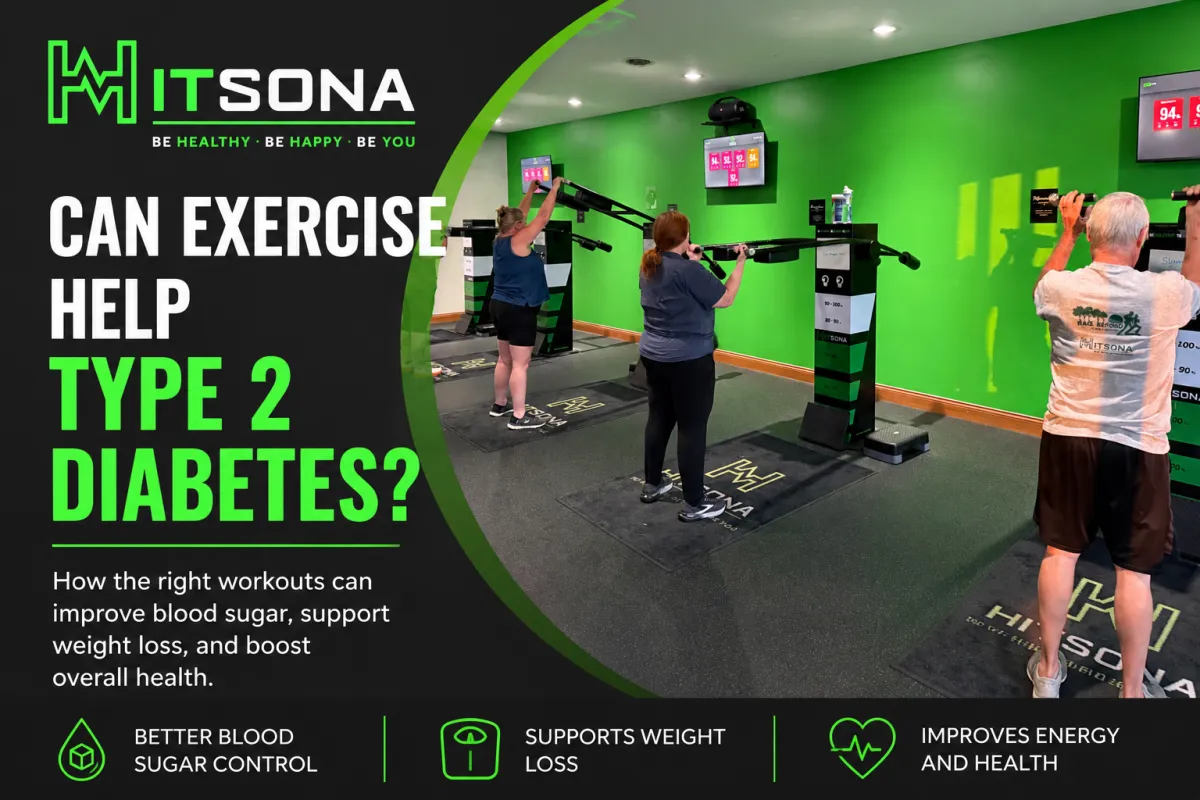
Can Exercise Help Type 2 Diabetes?
If you've been diagnosed with Type 2 diabetes, you've probably heard some version of this advice from your doctor:
"You need to exercise more."
But what does that actually mean? Can exercise really help manage Type 2 diabetes? And if so, what kind of exercise works best?
The good news is that exercise is one of the most effective lifestyle tools available for managing Type 2 diabetes, improving blood sugar control, supporting weight loss, and reducing the risk of future health complications.
Let's break down why.
How Exercise Helps Type 2 Diabetes
When you exercise, your muscles use glucose (sugar) as fuel. This means your body naturally pulls glucose out of your bloodstream and uses it for energy.
Even better, regular exercise helps your body become more sensitive to insulin.
Insulin is the hormone responsible for moving sugar from your bloodstream into your cells. One of the biggest challenges with Type 2 diabetes is insulin resistance, meaning your body doesn't respond to insulin as effectively as it should.
Regular exercise can help:
Lower blood sugar levels
Improve insulin sensitivity
Reduce insulin resistance
Support healthy weight loss
Improve heart health
Increase energy levels
Improve sleep quality
Reduce stress levels
For many people, exercise becomes one of the most powerful tools for improving diabetes management alongside proper nutrition and guidance from their healthcare provider.
Can Exercise Help Lower A1C Levels?
One of the most common questions people ask is whether exercise can help lower their A1C.
The answer is yes.
A1C measures your average blood sugar levels over the previous two to three months. Numerous studies have shown that regular physical activity can help lower A1C levels by improving how your body uses glucose.
In fact, many healthcare providers recommend exercise as a first-line strategy for managing Type 2 diabetes because of its impact on blood sugar control.
What Is the Best Type 2 Diabetes Workout?
The best workout for someone with Type 2 diabetes is one they can consistently stick with.
Many people assume they need to start running, doing intense boot camps, or spending hours in a gym. That's often where people become overwhelmed and quit.
Instead, focus on a combination of:
Strength Training
Strength training helps build and maintain muscle mass.
Why is this important?
Muscle tissue acts like a sponge for glucose. The more muscle you have, the more efficiently your body can use blood sugar.
Strength training can:
Improve insulin sensitivity
Increase metabolism
Support weight loss
Improve daily function and mobility
Walking and Cardiovascular Exercise
Walking remains one of the most effective forms of exercise for diabetes.
Even a brisk 20-30 minute walk can help lower blood sugar levels and improve cardiovascular health.
Other options include:
Cycling
Swimming
Elliptical training
Rowing
Low-impact interval training
Consistency Matters More Than Intensity
One mistake many people make is trying to do too much too soon.
The goal isn't to have the perfect workout.
The goal is to create a routine you can maintain for months and years.
Three consistent workouts each week will almost always outperform occasional bursts of extreme exercise.
Exercise and Diabetes Weight Loss
Weight loss is often recommended for individuals with Type 2 diabetes because excess body fat can contribute to insulin resistance.
The challenge is that many people focus solely on dieting and ignore exercise.
The most successful long-term results typically come from combining:
Regular exercise
Healthy eating habits
Adequate protein intake
Consistent sleep
Stress management
Exercise supports diabetes weight loss by:
Increasing calorie expenditure
Preserving muscle mass during weight loss
Improving metabolic health
Making it easier to maintain weight loss long term
It's important to remember that the scale isn't the only measure of success.
Many people experience improvements in blood sugar levels, energy, strength, and body composition before they notice significant weight changes.
Common Concerns About Exercising With Diabetes
"I'm too out of shape."
Everyone starts somewhere.
You don't need to be fit before beginning an exercise program.
Even small amounts of movement can create meaningful improvements.
"I have joint pain."
Low-impact exercise options can be highly effective while placing less stress on the knees, hips, and back.
Walking, cycling, swimming, and guided strength training programs are often excellent choices.
"I don't have enough time."
Many people are surprised to learn that effective workouts don't need to last an hour.
Short, structured workouts performed consistently can produce significant benefits.
When Should You Talk to Your Doctor?
Before starting any new exercise program, especially if you have Type 2 diabetes or other health conditions, it's important to consult your healthcare provider.
They can help determine:
Appropriate exercise intensity
Blood sugar monitoring recommendations
Medication considerations
Any limitations based on your health history
Exercise Is One of the Best Investments in Your Health
If you're living with Type 2 diabetes, exercise isn't just about burning calories.
It's about improving how your body functions.
Regular physical activity can help improve blood sugar control, support healthy weight loss, increase energy, strengthen your heart, and improve your overall quality of life.
The key is finding an exercise program you can stick with consistently.
Small steps performed regularly often lead to the biggest long-term changes.
Looking for a Diabetes-Friendly Fitness Program in Fort Wayne?
At Hitsona Fort Wayne, we work with many adults who are looking to improve their health, lose weight, increase energy, and create sustainable exercise habits.
Our coach-led, low-impact, 25-minute workouts are designed to be approachable for people who may feel intimidated by traditional gyms or are managing health concerns such as Type 2 diabetes.
If you're looking for a supportive environment to begin your fitness journey, we'd love to help.
Learn more at Hitsona Fort Wayne or schedule a free discovery call to see if our program is the right fit for you.
