
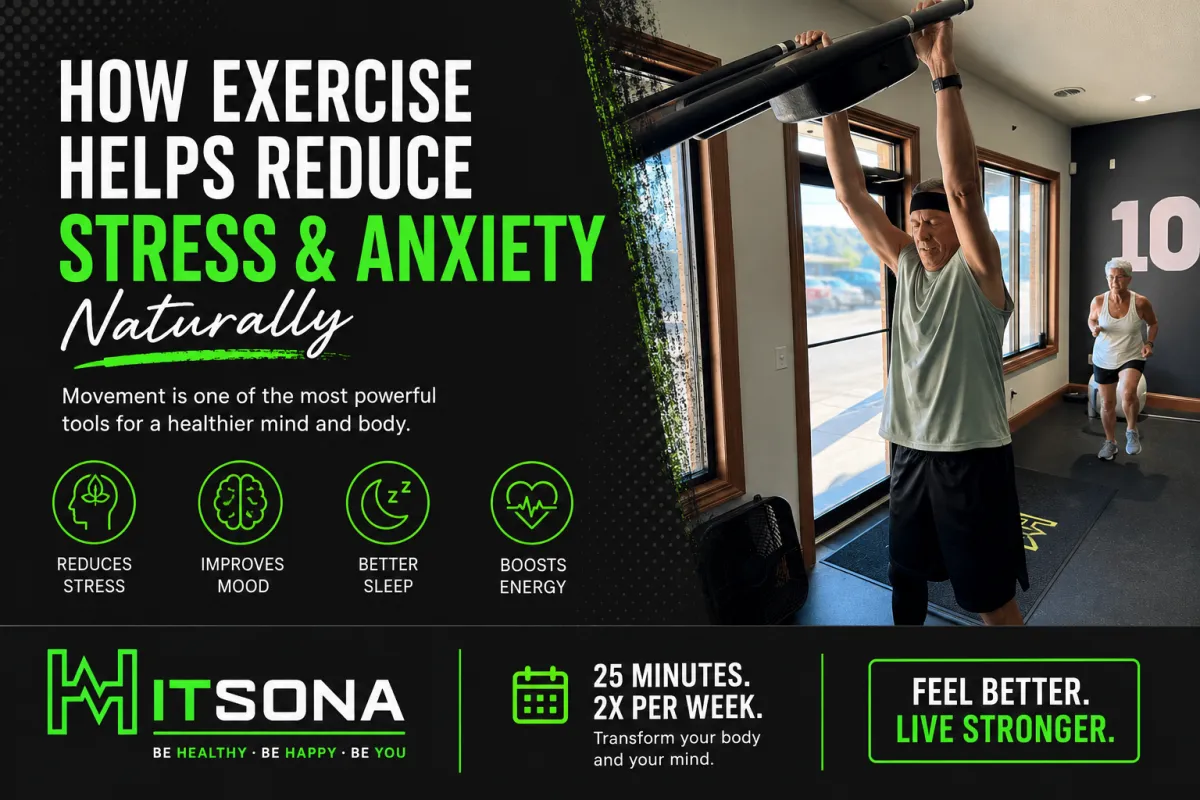
How Exercise Helps Reduce Stress and Anxiety Naturally
Feeling Overwhelmed? Exercise May Be One of the Most Powerful Stress Relievers Available
Stress has become a normal part of life for many adults in Fort Wayne.
Between work responsibilities, family obligations, financial pressures, health concerns, and the constant demands of daily life, it's no surprise that many people feel anxious, overwhelmed, and mentally exhausted.
The good news?
One of the most effective tools for managing stress and anxiety isn't found in a prescription bottle—it's movement.
Research continues to show that regular exercise for stress relief can significantly improve mood, reduce anxiety symptoms, increase energy levels, and help people feel more in control of their lives.
If you've been feeling stressed, anxious, or mentally drained, here's what you need to know about the connection between fitness and anxiety.
What Happens to Your Body When You're Stressed?
When your brain perceives a threat—whether it's a looming deadline, financial stress, family conflict, or health concern—it activates your body's "fight or flight" response.
This causes:
Increased heart rate
Elevated blood pressure
Muscle tension
Faster breathing
Higher cortisol levels
Increased feelings of worry or nervousness
While this response can be helpful in short-term situations, chronic stress keeps your body in a constant state of alertness.
Over time, this can contribute to:
Fatigue
Weight gain
Sleep problems
Digestive issues
High blood pressure
Anxiety
Depression
This is where exercise can make a dramatic difference.
Why Exercise Is So Effective for Stress Relief
Many people think exercise is only about losing weight or building muscle.
In reality, one of the biggest benefits of exercise is what it does for your brain.
Exercise Releases Feel-Good Chemicals
Physical activity increases the production of:
Endorphins
Dopamine
Serotonin
These chemicals help improve mood, reduce feelings of stress, and create a greater sense of well-being.
Many people experience what's often called a "runner's high," but you don't need to run a marathon to experience these benefits.
Even a short workout can create noticeable improvements in mood.
Exercise Helps Lower Stress Hormones
Regular movement helps reduce excess cortisol and adrenaline levels.
When these stress hormones remain elevated for long periods, they can contribute to:
Anxiety
Poor sleep
Increased belly fat
Low energy
Difficulty concentrating
Consistent exercise helps bring these hormones back into balance.
Exercise Gives Your Mind a Break
When you're exercising, you're focused on movement.
You're thinking about:
Your breathing
Your workout
Your form
Your heart rate
For many people, this provides a mental reset from the endless stream of worries and responsibilities they carry throughout the day.
Think of it as active meditation.
The Connection Between Fitness and Anxiety
Many people dealing with anxiety avoid exercise because they're already tired, overwhelmed, or lacking motivation.
Ironically, exercise is often exactly what their body needs.
Studies consistently show that regular physical activity can:
Reduce anxiety symptoms
Improve emotional resilience
Increase self-confidence
Improve sleep quality
Reduce feelings of overwhelm
Exercise doesn't eliminate life's challenges, but it can dramatically improve your ability to handle them.
People who exercise regularly often report feeling calmer, more focused, and more capable of managing everyday stress.
What Type of Exercise Is Best for Mental Health?
The best exercise is the one you'll actually do consistently.
That said, certain types of mental health workouts can be especially effective.
Strength Training
Strength training provides both physical and mental benefits.
Many people find that lifting weights or performing resistance-based exercises helps:
Build confidence
Reduce anxiety
Improve focus
Increase energy
There's something powerful about seeing yourself become stronger over time.
Walking
Walking remains one of the most underrated forms of stress relief.
Even a 20-30 minute walk can:
Lower stress levels
Improve mood
Increase mental clarity
Reduce anxious thoughts
Bonus points if you can walk outdoors.
Low-Impact High-Intensity Training
For busy adults, efficient workouts can be a game changer.
A properly designed 20-25 minute workout can provide significant stress-relief benefits while fitting into a busy schedule.
Many adults find they feel more energized and mentally refreshed after short, structured workouts than after spending an hour at a traditional gym.
Why Consistency Matters More Than Intensity
One of the biggest mistakes people make is believing they need intense workouts every day.
The truth is that consistency beats intensity.
For stress management, it's often better to:
Exercise 2-4 times per week
Keep workouts manageable
Focus on sustainability
Build a routine you can maintain long-term
Your goal isn't to exhaust yourself.
Your goal is to create a habit that supports both your physical and mental health.
Exercise and Better Sleep
Stress and anxiety often create a vicious cycle.
You feel stressed.
You don't sleep well.
Lack of sleep increases stress.
And the cycle continues.
Regular exercise can help break that cycle by:
Helping you fall asleep faster
Improving sleep quality
Reducing nighttime anxiety
Increasing daytime energy
Better sleep often leads to better mental health, which then makes it easier to continue exercising consistently.
Stress Relief Through Community and Support
One overlooked benefit of exercise is the social connection it can provide.
Many adults in Fort Wayne struggle with stress in isolation.
Having supportive coaches, workout partners, or a fitness community can help reduce feelings of loneliness and overwhelm.
When people feel connected and supported, they are often more successful in managing both their physical and mental health.
Finding the Right Fitness Program in Fort Wayne
If stress, anxiety, low energy, or burnout have been affecting your quality of life, exercise may be one of the most powerful natural tools available.
The key is finding a program that feels approachable, supportive, and sustainable.
You don't need extreme workouts.
You don't need to spend hours in a gym.
You simply need a consistent plan that helps you move your body regularly and supports your long-term health.
At Hitsona Fort Wayne, we work with adults who want a comfortable, supportive environment where they can improve their health, increase their energy, reduce stress, and build strength without the intimidation of a traditional gym.
Because sometimes the biggest benefit of exercise isn't what it does for your body.
It's what it does for your mind.
Looking for a Supportive Fitness Program in Fort Wayne?
If you're looking for a fitness program that can help improve your physical health while also reducing stress and boosting energy, we'd love to help.
Learn more about Hitsona Fort Wayne and discover how just 25 minutes a few times per week can help you feel stronger, healthier, and more in control of your health journey.
