
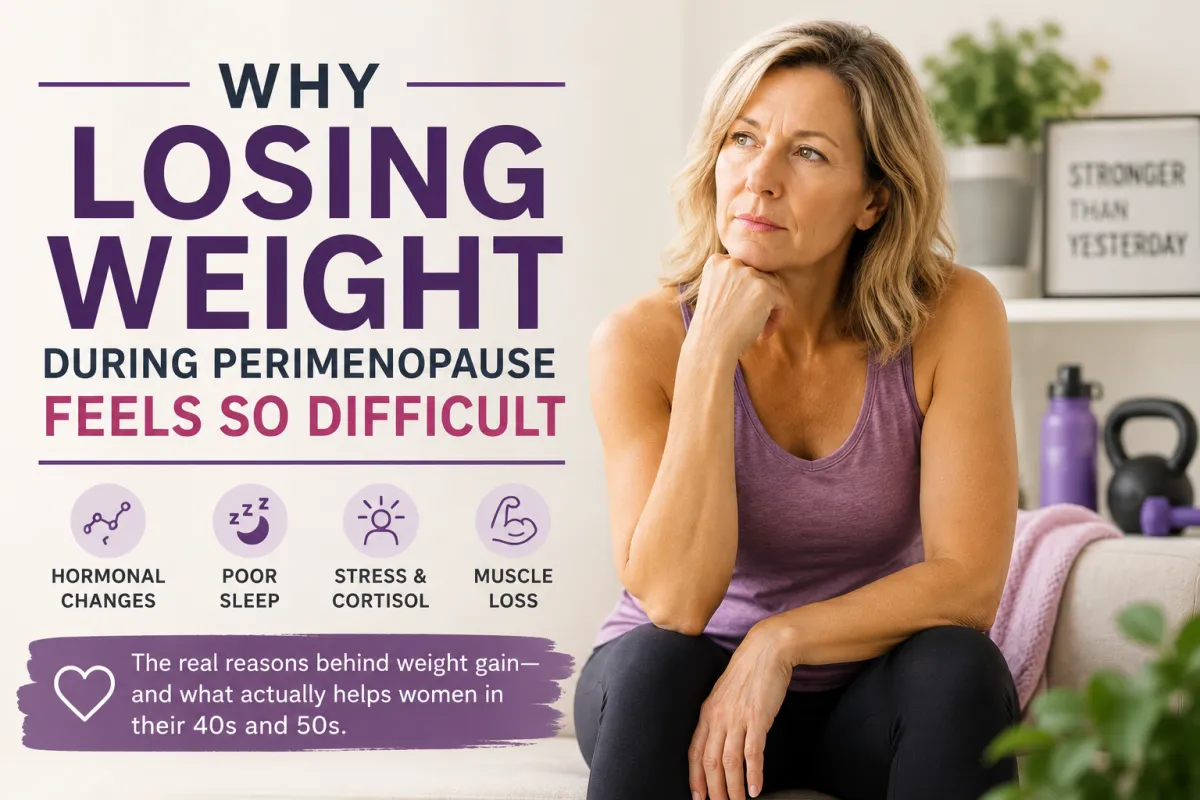
Why Losing Weight During Perimenopause Feels So Difficult
Understanding Weight Gain During Perimenopause — And What Actually Helps
If you feel like your body suddenly stopped responding the way it used to… you’re not imagining it.
Many women in their late 30s, 40s, and 50s begin noticing frustrating changes:
Weight gain around the stomach
Constant bloating
Low energy
Trouble sleeping
Cravings that feel impossible to control
Muscle loss
Feeling “puffy” no matter how healthy they try to eat
And perhaps the most frustrating part?
The things that used to work… suddenly don’t anymore.
You may be eating less. Exercising more. Walking daily. Cutting carbs. Skipping meals. Trying “healthy” foods.
Yet the scale barely moves.
If this sounds familiar, there’s a very real reason why.
What Is Perimenopause?
Perimenopause is the transition phase leading up to menopause. It can begin as early as your late 30s or early 40s and may last several years before menopause officially occurs.
During this time, hormone levels begin fluctuating — especially estrogen and progesterone.
These hormonal shifts can affect:
Metabolism
Appetite
Fat storage
Sleep quality
Stress levels
Energy
Muscle maintenance
Insulin sensitivity
This is why many women experience unexplained weight gain during perimenopause even when their habits haven’t changed much.
Why Menopause Weight Loss Feels So Hard
One of the biggest misconceptions is that menopause weight gain is simply about “eating too much” or “not trying hard enough.”
In reality, several things are happening at once.
1. Your Metabolism Naturally Slows Down
As we age, we naturally lose muscle mass.
Muscle plays a huge role in metabolism because it burns more calories than fat — even at rest.
Without strength training, women often lose muscle during perimenopause, making it easier to gain weight and harder to lose it.
This is one reason why endless cardio alone often stops working.
2. Hormonal Changes Increase Fat Storage
Declining estrogen levels can shift where the body stores fat.
Many women notice increased abdominal fat during perimenopause, even if they never struggled with belly fat before.
This isn’t just cosmetic. Increased belly fat is also linked to:
Higher inflammation
Blood sugar issues
Increased risk of heart disease
Higher stress hormone levels
3. Stress and Cortisol Make Things Worse
Women in this stage of life are often juggling:
Careers
Aging parents
Teenagers or young adults
Relationships
Financial stress
Poor sleep
Chronic stress increases cortisol levels, which can:
Increase cravings
Promote belly fat storage
Disrupt sleep
Make recovery harder
Increase fatigue
When your body feels stressed constantly, it becomes much harder to lose weight.
4. Sleep Quality Declines
Hot flashes, night sweats, anxiety, and hormonal shifts often disrupt sleep during perimenopause.
Poor sleep affects:
Hunger hormones
Energy levels
Recovery
Motivation
Blood sugar regulation
This creates a cycle where exhaustion leads to cravings, low motivation, and inconsistent habits.
5. Extreme Dieting Often Backfires
Many women respond by eating less and less.
Skipping meals, cutting entire food groups, or doing intense workouts daily can actually increase stress on the body.
The result?
More fatigue
More cravings
More inconsistency
Less muscle retention
Slower metabolism
This is why sustainable menopause weight loss usually comes from balance — not punishment.
What Actually Helps With Weight Loss During Perimenopause?
The good news?
You are not stuck.
But the solution usually isn’t:
More cardio
Starving yourself
Spending 2 hours in the gym
Trying another “detox”
The women who see the best long-term results during perimenopause typically focus on a few key things consistently.
Prioritize Strength Training
Strength training becomes incredibly important during perimenopause.
Building and maintaining muscle helps:
Support metabolism
Improve insulin sensitivity
Increase strength
Protect bone density
Improve energy
Support long-term weight management
And no — this does NOT mean bodybuilding.
Even short, structured resistance workouts can make a major difference.
Focus on Protein
Many women are unintentionally under-eating protein.
Protein helps:
Preserve muscle
Keep you fuller longer
Stabilize blood sugar
Reduce cravings
Support recovery
A surprising number of “healthy” diets are actually very low in protein.
Stop Chasing Perfection
Consistency matters far more than perfection.
The women who succeed long-term usually stop focusing on:
“All or nothing” thinking
Crash diets
Starting over every Monday
Instead, they build sustainable routines they can realistically stick with.
Reduce Stress on the Body
Sometimes the goal isn’t to push harder.
It’s to recover better.
This may include:
Better sleep habits
Walking
Hydration
Lower-impact workouts
Recovery days
Structured exercise instead of random workouts
Why Support and Accountability Matter More During This Phase
One of the hardest parts of perimenopause is emotional.
Many women feel frustrated because:
Their body feels unfamiliar
Their confidence drops
They feel embarrassed
They think they’re failing
The truth is:
Your body is changing — and your strategy may need to change too.
Having support, coaching, accountability, and a realistic plan often makes a huge difference.
A Different Approach to Fitness in Fort Wayne
At Hitsona Fort Wayne, we work with many women navigating perimenopause and menopause weight loss.
And honestly?
Most of them tell us the same thing when they first walk in:
“I thought I just needed more willpower.”
What they usually needed instead was:
A plan designed for this stage of life
Strength training without intimidation
Accountability
Guidance around consistency
Supportive coaching
A place that didn’t feel like a traditional gym
That’s why our approach focuses on:
Low-impact strength-based workouts
Short 25-minute sessions
Coaching and accountability
Sustainable habits
Helping adults 40+ feel stronger, healthier, and more energized
No mirrors. No egos. No trying to “crush” yourself every workout.
Just a realistic, structured approach designed to help you feel better again.
Final Thoughts
If weight gain during perimenopause has left you feeling discouraged, frustrated, or confused… you are far from alone.
Your body is changing.
That does not mean you are broken.
The goal now is not punishment.
It’s learning how to support your body differently.
And when you combine:
Strength training
Better nutrition
Recovery
Consistency
Accountability
…real progress is absolutely possible.
If you’re in the Fort Wayne area and looking for guidance, support, and a more realistic approach to menopause weight loss, Hitsona Fort Wayne is here to help.
